 Book Meeting
Skip to content

Paid search puts your business in front of people who are actively looking for what you sell, at the moment they are looking. Done well, it is the shortest route from a marketing budget to a measurable enquiry.
Done poorly, it is also the fastest way to spend money on clicks that were never going to convert. The difference is management — how tightly the targeting is drawn, how closely the ads match search intent, how well the landing page follows through, and how honestly the results are measured.
We manage campaigns end to end: account structure, keyword research, ad copy, landing page review, bid and budget management, negative keywords, and conversion tracking.
Platforms we manage:

Research before spend
Every campaign starts with the groundwork: who your customers are, what they actually type, which competitors are bidding, and which keywords carry genuine buying intent rather than just volume. High-volume terms are often the least profitable ones to bid on.
Disciplined bid and budget management
Budget is directed toward the keywords, audiences, devices and times of day that convert, and pulled back from those that do not. Negative keyword lists are maintained continuously, because most wasted spend comes from queries you never intended to appear for.
Ad copy and landing pages that match intent
A click is only worth what happens next. Ad copy is written to answer the search that triggered it, and the landing page is reviewed so that the offer, the form and the page speed support the conversion rather than working against it.
Conversion tracking you can trust
Before optimisation means anything, the measurement has to be right. That means tracking the actions that matter — calls, form submissions, qualified enquiries — rather than counting clicks and calling them results.
Transparent reporting
You see the account, the spend, the conversions and the cost per acquisition. No black boxes, and no metrics selected to flatter the report.
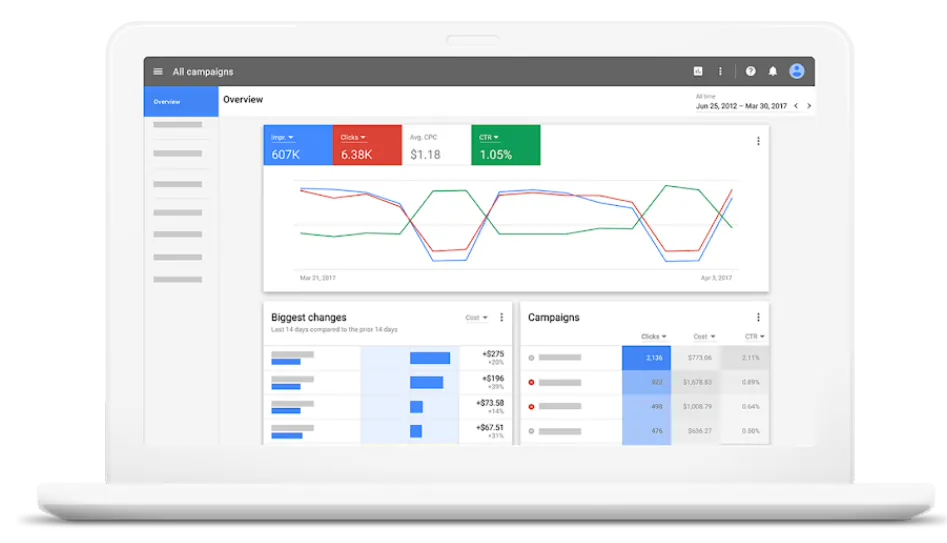
Paid search should be judged on business outcomes, not on impressions or clicks. These are the metrics we manage campaigns against and report on:



Ready to work with a marketing partner that understands both strategy and execution? Fill out the form and we’ll send you a free, no-obligation action plan outlining how we can improve your SEO, website performance, PPC campaigns, and digital marketing within the next 90 days.
Paid search is the fastest way to appear in front of people already looking for what you sell. It is also the easiest place to waste money, because the platform will happily spend a budget whether or not the underlying setup is sound.
The moment a budget stops, the traffic stops. That is not a criticism — it is simply how the channel works, and it makes paid search well suited to situations where you need enquiries now, want to test which messages actually convert, or need coverage while slower work builds. It sits alongside SEO rather than replacing it: organic rankings compound, ads do not.
Google Ads counts a conversion only inside a set window after the click. If your sales cycle is longer than that window, genuine revenue never gets attributed to the campaign that created it — and the account looks like a failure when it was working. Businesses with long or considered purchases need the conversion window, and ideally offline conversion imports, set against how their deals actually close.
Smart bidding optimises toward the conversions it can see. Feed it undifferentiated form fills and it will find you more form fills, including the low-value ones. Tracking different enquiry types separately — quote requests, calls, downloads — is what lets the algorithm pull toward the enquiries you actually want.
Work backwards from the maths rather than picking a figure: what a customer is worth, roughly what share of enquiries convert, and what clicks cost in your industry. A budget too small to gather data tends to produce neither results nor useful learning, which is worth knowing before you start rather than after.
Long enough for the account to accumulate meaningful data — and longer again if your sales cycle runs for months. Restructuring campaigns every fortnight because cost per lead looks high prevents an account from ever reaching the point where it can be optimised properly.
Not always, but ads send traffic to pages, and a page that loads slowly or buries the enquiry route will waste clicks you have paid for. If landing pages are the weak link, that is usually worth fixing before increasing spend — see website design.
More questions are answered on our FAQ page, or you can get in touch to talk through your account.